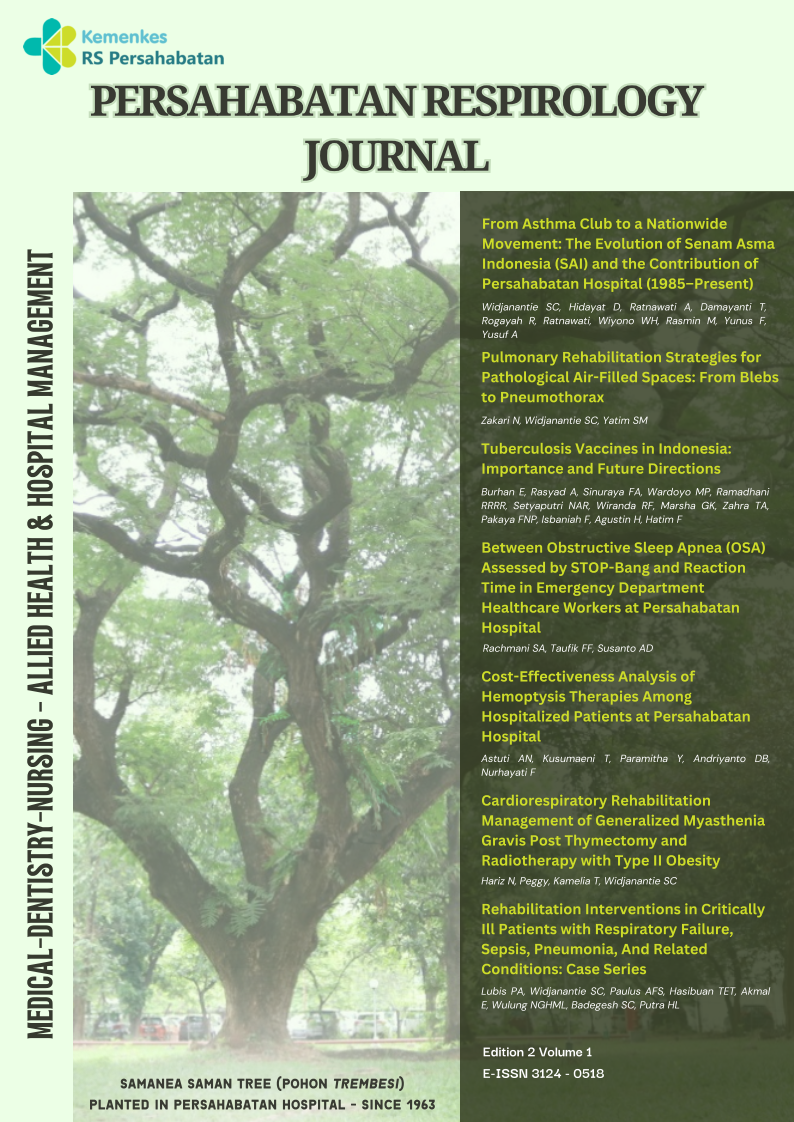
Pulmonary Rehabilitation Strategies for Pathological Air-Filled Spaces: From Blebs to Pneumothorax
DOI:
https://doi.org/10.67483/prj.v2.i1.18Keywords:
pulmonary, rehabilitation, pneumothoraxAbstract
Background: Pulmonary rehabilitation is an effective non-pharmacological approach forrespiratory conditions. However, its use in patients with bullae, blebs, or pneumothoraxrequires modification to balance therapeutic benefits against the risk of further lung injury.This review outlines strategies for implementing pulmonary rehabilitation in these high-riskpopulations.
Methods: A literature review was conducted using PubMed and Google Scholar, focusingon articles and studies on rehabilitation in cases of emphysema, bullae, bleb parenchyma,and pneumothorax.
Results: Most articles on this topic were case studies, except for one multicenter trialexamining pulmonary rehabilitation in patients with advanced emphysema. Pulmonaryrehabilitation strategies can be divided into the very acute phase and the early phase. Mostimportantly, pulmonary rehabilitation must be delivered through a multidisciplinary approach,and the team needs to assess medical suitability and tailor the exercises accordingly. Theprogram should be progressed and continued in an outpatient setting to achieve functionalbenefits and improve quality of life.
Conclusion: Pulmonary rehabilitation is both feasible and beneficial for patients with bullaeor pneumothorax and critically progressed. Current strategies are largely based on the caselevelevidence and clinical reasoning.
Downloads
Published
Issue
Section
License
Copyright (c) 2026 Nurulhuda Zakari, Siti Chandra Widjanantie, Sa'ari Mohamad Yatim (Author)

This work is licensed under a Creative Commons Attribution-NonCommercial-ShareAlike 4.0 International License.